
Effective Glaucoma Treatment
in Lahore at Eye Care Center
Professional diagnosis, personalized medical management and
advanced surgical intervention for long-lasting eye health.
- Early detection & accurate glaucoma diagnosis
- Personalized medical & surgical glaucoma care
- Latest diagnostic technology & monitoring
- Long-term vision protection
Affiliations, Certifications & Accredited Clinical Expertise
Dr. Muhammad Nabeel Khalid stands out as a certified Pakistani ophthalmologist and skilled eye surgeon. He holds advanced qualifications that cover surgery and diagnostic work.
In addition to these, his record shows many successful eye care operations. Patients receive strong eye laser treatment options in Lahore. Key credentials list FCPS in ophthalmology, plus a Vitreo Retina fellowship from Mayo Hospital/KEMU Certifications, phacoemulsification and advanced retina management.
He has received specialized training on advanced laser platforms, accredited by leading international ophthalmology groups and hospitals with recognized quality standards. All these points add to his solid clinical work and patient care standards throughout his medical care.

MBBS
King Edward Medical University
Fellowship Vitreo Retina
Mayo Hospital / KEMU

KAROPHTH
Ophthalmology Conferences

PICO
Ophthalmology Conferences

CME
Programs in Anterior & Posterior Segment Surgery

Phaco Coach
Phacoemulsification Skills Training

FCPS
College of Physicians and Surgeons

PMDC
Registered Consultant Ophthalmologist
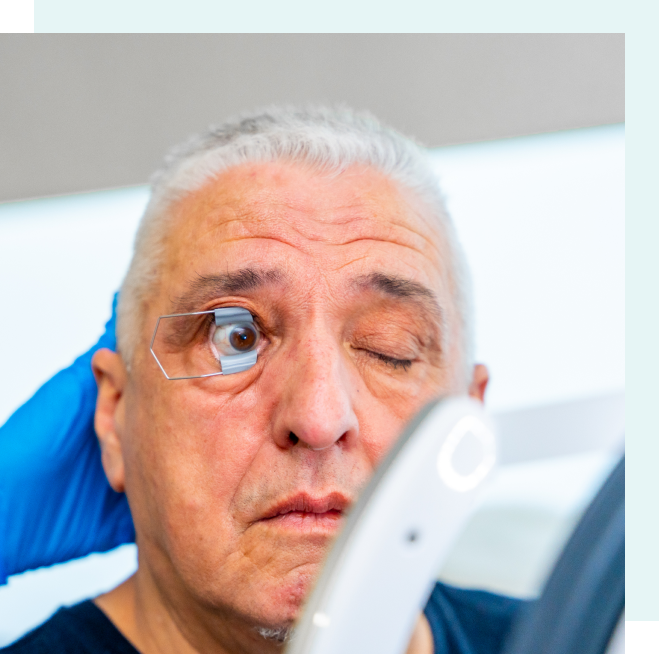
Clinical Outcomes & Patient's Perspectives
There are some patient testimonials for glaucoma care in Lahore. These are the experiences of our patients that show the effectiveness of our management protocols for getting glaucoma treatment in Lahore.
Clinical Profile Eye Care Center
About our ophthalmology practice and Lahore, Eye Care Center is dedicated to managing complex eye conditions with a specific focus on glaucoma treatment. The practice utilizes contemporary diagnostic and surgical techniques to provide care for patients requiring medical and surgical glaucoma treatment in Lahore.
Dr. Muhammed Nabeel Khalid is a consultant ophthalmologist serving at Eye Care Center, Lahore. He has advanced training in cataract, anterior segment and vitreoretinal diseases. He is currently serving at the primary and secondary health care departments, where he performs high-volume cataract and anterior segment surgery, 100-plus cases per month, and manages a busy OPD and emergency eye service. He is the best glaucoma specialist in Lahore.
His clinical focus includes the diagnosis and treatment of diabetic retinopathy, macular degeneration, and retinal vascular disorders. All these procedures are done with the prime motive of patient safety, outcomes, and satisfaction.
Dr. Nabeel Khalid completed a subspecialty fellowship in Vitreoretina at Mayo Hospital in King Edward Medical University (KEMU), Lahore. There, he gained extensive experience in intravitreal injections, retinal laser, and vitreoretinal surgery. He has also previously served at Ali Trust Eye Hospital, Okara. There, he performed more than 1200 cataract surgeries annually and also helped establish diabetic retinopathy screening and treatment procedures.
What is Glaucoma? (Kala Motia)
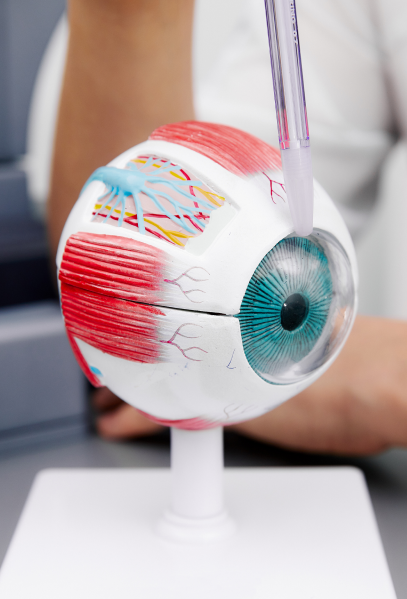
It is not a single ailment or eye disease; rather, it is a medical term that describes multiple eye conditions that cause progressive damage to the optic nerve. We can describe glaucoma as a disturbance in the eye’s natural drainage system, which builds up fluids. In this eye condition, a person feels strong intraocular pressure inside the eye.
It has key treatment options like medications, laser therapy and surgery with experts at eye hospitals.
Etiology of Glaucoma
How Glaucoma Develops?
Glaucoma develops when the optic nerve, which transmits visual signals from the eye to the brain, becomes progressively damaged. This damage most commonly occurs due to elevated intraocular pressure, but it can also occur at normal pressure levels in certain types of glaucoma.
Inside the eye, a clear fluid called aqueous humor is continuously produced to nourish eye structures. This fluid normally drains through a microscopic drainage system known as the trabecular meshwork, located at the angle where the cornea and iris meet.
When:
- The eye produces too much aqueous humor, or
- The drainage system becomes partially or completely blocked,
fluid begins to accumulate. This buildup increases eye pressure, which gradually compresses and damages the optic nerve fibers, leading to irreversible vision loss if untreated.
Common Risk Factors of Glaucoma
- Age: The risk increases significantly after the age of 40 and is most common in adults over 60
- Genetics: A positive family history of glaucoma greatly increases risk
- Raised Intraocular Pressure: The most significant modifiable risk factor
- Medical Conditions: Diabetes, hypertension, hypotension, and cardiovascular disease
- Refractive Errors: High myopia (short-sightedness) is associated with open-angle glaucoma
- Steroid Use: Prolonged use of corticosteroid eye drops or systemic steroids
- Eye Trauma or Surgery: Can lead to secondary glaucoma
- Congenital Abnormalities: Maldevelopment of drainage angles present at birth
Types of Glaucoma
There are two classified types of Glaucoma. First are primary, and the others are secondary types. They differ in terms of their causes. Primary types are caused by drainage blockage, while trauma, injury, medical conditions, tumors, inflammation, or pigment dispersion or steroid influence cause secondary types.
Primary types include open-angle glaucoma and angle-closure glaucoma.
- Primary open-angle glaucoma: it is the most common glaucoma type that occurs in approximately 90% of patients, due to the gradual blockage of drainage. It develops slowly without showing initial symptoms. It can be treated with eye drops to improve drainage at the initial stage.
- Angle closure glaucoma: It's the emergency subtype, acute congestive, the sudden blockage of the iris drainage causes that. As a result, patients' eye pressure spikes, feel sudden severe pain, blurred vision, and halos. So it requires immediate treatment of iridotomy to open drainage angles.
- Congenital glaucoma is present at birth due to malformed drainage angles. It can be treated by surgery, such as goniotomy.
- Phacomorphic glaucoma is caused by an intumescent lens or swollen lens that is blocking the drainage angle. This condition is treated by cataract surgery.
- Phacotoxic glaucoma results from the leakage of lens protein, which induces inflammation and pressure rise. This condition can be treated with anti-inflammatory medications and eye pressure-lowering drugs.
How Do We Treat Glaucoma?
Our treatment pathways intend to stop the optic nerve damage. We will maintain the safe intraocular pressure with structured methods and treatments for pressure control.

Medications
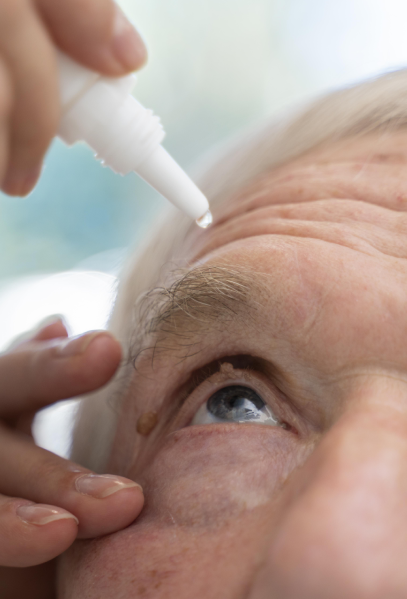
Prescriptive eye drops (prostaglandins or beta-blockers) are often considered the first step to reduce the fluid production or to improve its flow through blocked channels.

Laser Therapy
Then comes the laser treatment option. It involves procedures like laser iridotomy, which is used to treat the angle closure glaucoma. At the same time, other laser techniques can treat open-angle trauma.

Surgical Intervention
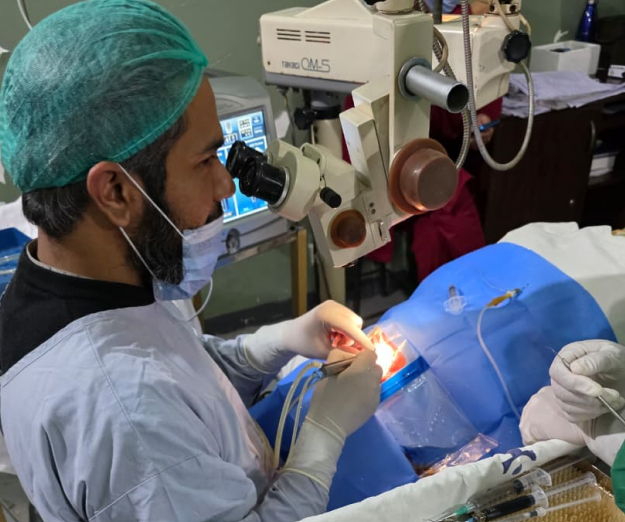
When there is no benefit of using prescribed drops, it's time to go for surgical options. If needed, glaucoma surgery in Lahore at our facility includes the surgical procedures like trabeculectomy in order to create new drainage channels.
Symptoms of Glaucoma
The symptom identification will help you recognize the right cause by going for early intervention.
- Open-angle glaucoma does not show significant symptoms at initial stages, unless major vision loss occurs.
- While acute congestive glaucoma comes with sudden symptoms of severe pain, redness, headache or nausea.
- Congenital glaucoma occurs in infants that can be symptomized with frequent and excessive tearing, cloudy or large corneas and photosensitivity issues.
Why Choose Dr. Nabeel for Glaucoma Management in Lahore?
Long Term Monitoring
You will get management services ranging from diagnosis To long term follow up until fully recovered.
Integrating Diagnostic and Treatment Services
There will be advanced Technology for eye treatment from diagnosis to accurate staging to select the treatment
Patient-oriented Coordination
Also, if the patient has other medical conditions like a tumor, diabetes, hypertension or other conditions. Dr Nabeel will provide coordinated care for such complex cases.
Use of Modern Ophthalmology
We have modern technology at our Eye Care Centre to give you better treatment options. It also provides services of treatment through modern laser and microsurgical technology.
Individualized Treatment Plan
Every patient has a unique physiology and a different eye condition, so that Dr Nabeel will customize the treatment plan according to your medical condition and the requirements of eye treatment.

Which Glaucoma Type is present?
clearly states when you should go to see a professional Eye evaluation.
| Clinical symptoms | Probably Glaucoma Type or condition |
|---|---|
| No symptomatic peripheral vision loss, slow or no pain | Primary open-angle glaucoma |
| Acute sudden ocular pain with systemic symptoms | Angle closure glaucoma |
| Optic neuropathy with normal pressure | Normal tension Glaucoma |
| Ocular hypertension following trauma | Traumatic Glaucoma |
| Infantile corneal clouding, enlargement and tearing | Congenital Glaucoma |
| Pressure elevation from an advanced cataract, lens blockage | Phacomorphic glaucoma |
| Due to inflammation caused by the pressure rise from the lens protein | Phacolytic or Phacotoxic Glaucoma |
| Intraocular pressure increases from steroid use | Steroid-induced Glaucoma |
Glaucoma Treatment
Cost in Lahore
The financial criteria for glaucoma treatment in Lahore are variable. It varies on the basis of glaucoma types, its progression, severity, and the treatment method selected. Usually, it involves treating glaucoma from the initial stages in the form of eye drops (prostaglandins or beta blockers) or the laser or surgery treatment includes selective laser trabeculoplasty (SLT) or minimally invasive trabeculectomy(MIGS). We provide clear information from the initial diagnostic consultation to treatment and follow-up monitoring.
Before and After Your Glaucoma Treatment with Dr. Nabeel
| Pretreatment status | Post treatment results |
|---|---|
| Headaches, high intraocular pressure | Stable, normalized pressure |
| Blurry edges in vision | Stabilized |
| Acute pain | Relief & less risk of more complications occurring |
| Nerve damage progressive risk | Reduced risk, slowed progression |
How Does Your Glaucoma Consultation Work?
The treatment procedure involves the following steps for specialized eye care.
Schedule
Appointment
Contact the clinic for arrangements for a consultation with Dr.Nabeel Khalid.
Complete Patient's Eye Assessment
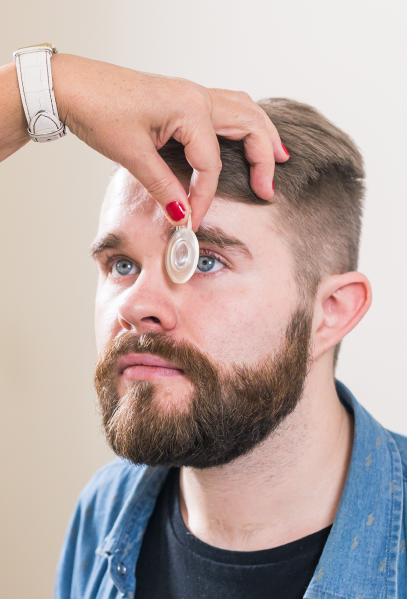
This process involves the complete evaluation of your eye by tonometry, pressure measurement, optic nerve examination, and visual field testing or scan.
Diagnostic
Review
Treatment Plan
Development
Treatment,
Monitoring & Follow-up
Contact us
Visit Eye Care Clinic in
Lahore's Premier Location.
Address: 314-B Khayaban-e-Jinnah, phase 1 Iqbal Avenue Housing Society, Lahore, 54700, Pakistan
Phone: 0311-7425077
WhatsApp: 0311-7425077
Opening Hours: Monday to Saturday (10.00 AM to 6.00 PM)
Note: In case of any emergency, eye care services are available through contact.
Have a question?
Need assistance?
Frequently
Asked Questions
We provide answers to your queries regarding our services and healthcare solutions available at Healer.
What are the early glaucoma signs?
Often none, which is why screenings are vital. There are almost no early symptoms. Peripheral vision loss occurs later, at the age of 40 or above, in most cases.
How is glaucoma diagnosed?
There are diagnosis methods like tonometry, optic nerve examination, and visual field testing to identify glaucoma.
What is the main cause of glaucoma?
The glaucoma commonly involves the causes of poor, slow or blocked fluid drainage, increasing eye fluid pressure and damaging the optic nerve. It takes about 60 -90 minutes for these scans.
Is surgery always needed?
No, Many cases are managed long-term with medication (drops of anti-inflammatory prostaglandins or beta-blockers) or laser(SLT), (MIGS).
How successful is glaucoma surgery?
Modern glaucoma surgery in Lahore has high success rates in controlling pressure when performed for appropriate indications.
Can congenital glaucoma be treated?
Yes, congenital glaucoma and primary congenital glaucoma require prompt, often surgical, intervention for the best visual outcome.
What does treatment cost?
They vary depending on different factors. However, the general estimated eye drops price ranges from PKR 1000-3000 per month, laser charges PKR 50,000-1,00,000 and surgery includes PKR 1,50,000- 3,00,000.